
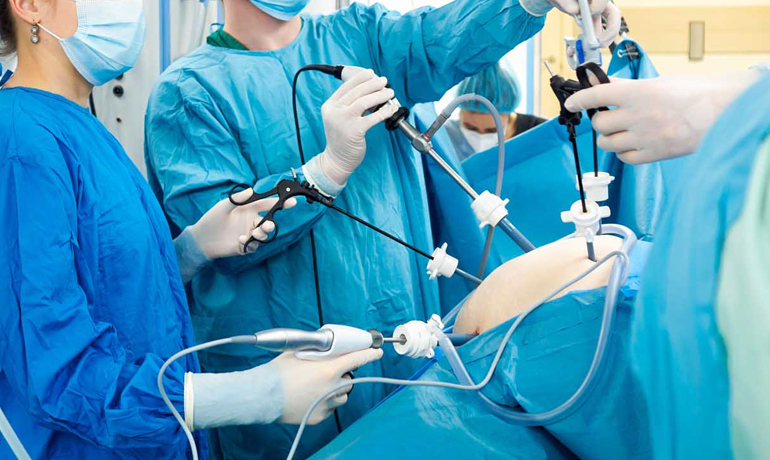
"Keyhole" spine surgery — sometimes searched for as "laser spine surgery" — describes minimally invasive procedures performed through small incisions using specialised instruments and, often, an endoscope or microscope, rather than the large exposure used in traditional open surgery.
What keyhole spine surgery is
Keyhole surgery, also called minimally invasive surgery (MIS), involves performing an operation through a small incision using specialised instruments and imaging guidance, rather than a large open incision. In spine care, this typically means using tubes, retractors, and either a microscope or an endoscope to access the affected area of the spine while disturbing as little surrounding muscle as possible. The phrase "laser spine surgery" is frequently searched by patients, but generally refers to this same category of small-incision decompression techniques — a laser is sometimes one tool used within the procedure, rather than a distinct type of surgery on its own.
Advantages of the keyhole approach
Reported advantages of keyhole spine surgery, compared to traditional open surgery, include smaller incisions typically under an inch, less disruption to surrounding muscle, reduced blood loss during surgery, less noticeable scarring, and a comparatively lower risk of wound infection due to the smaller wound. These factors can support a shorter hospital stay and a smoother early recovery for suitable patients, though outcomes still depend on the individual case.
Conditions commonly treated
Keyhole techniques are used to treat a herniated disc, decompress the spinal canal in spinal stenosis, address degenerative disc disease, and stabilise or realign slipped vertebrae in some cases of spondylolisthesis. They can also be used to stabilise spinal fractures or, in select cases, to biopsy or treat spinal tumours and infections.
Types of keyhole procedures
Common procedures in this category include microdiscectomy, laminectomy or foraminotomy performed through a small access point, spinal fusion using smaller incisions, kyphoplasty or vertebroplasty for fracture stabilisation using cement injection, and endoscopic spine surgery using a camera-guided instrument. These sit within the broader category of minimally invasive spine surgery.
When keyhole surgery may be considered
This approach is generally considered when non-surgical treatments — physiotherapy, medication, and activity modification — have not provided adequate relief, or when there are significant symptoms such as pain, weakness, or neurological changes affecting daily activities, alongside a confirmed diagnosis suited to this technique. Your surgeon will assess whether your specific condition and anatomy make you a good candidate for a keyhole approach rather than a traditional open procedure.
What the procedure involves
After positioning and anaesthesia, a small incision is made at the surgical site, and instruments are used to gently create a pathway to the spine while separating rather than cutting through muscle. An endoscope or microscope is used to visualise the area, and the specific procedure is carried out using micro-instruments before the incision is closed with sutures or staples.
Recovery expectations
Postoperative care focuses on pain management, wound care, and clear guidance on activity restrictions. Physiotherapy is often recommended to support recovery and strengthen the spine, with regular follow-up to monitor healing. Return to normal activity is generally gradual and guided by your surgeon's advice — the specific pace depends on the procedure performed and your individual recovery.
Risks to be aware of
While generally considered safe, keyhole spine surgery carries risks similar to other spine procedures, including infection, bleeding, nerve injury (reduced but not eliminated by precise visualisation techniques), incomplete symptom relief, and anaesthesia-related complications. These will be discussed individually as part of informed consent before your procedure.
What influences the cost
Cost depends on the specific procedure and equipment used, whether an endoscope, microscope, or other technology is involved, hospital stay length, and any implants required, along with insurance or cashless coverage. Call or WhatsApp NAIR Spine & Knee Clinic for a personalised estimate after consultation.
What a consultation involves
Your consultation includes a review of your symptoms and imaging and a clear explanation of whether a keyhole approach is appropriate for your specific condition. Dr. Vishnu Vikraman Nair consults at NAIR Spine & Knee Clinic, Kharghar and Medisecure Hospital, Kamothe; call or WhatsApp the clinic to confirm the current consulting schedule.
Frequently asked questions
What is often marketed as "laser spine surgery" is generally the same family of keyhole (minimally invasive) decompression procedures described here — small-incision techniques using specialised instruments and an endoscope or microscope. A laser is sometimes used as one tool within these procedures, but it is the small-incision, muscle-sparing approach that defines the technique, not the laser itself.
Surgical spinal decompression refers to procedures that relieve pressure on a nerve or the spinal cord, typically by removing a small amount of bone, disc material, or ligament. When performed through keyhole techniques, this is done via a small incision rather than a large open exposure.
It is commonly used for a herniated disc, spinal stenosis, degenerative disc disease, and some cases of spondylolisthesis, and can also be used to stabilise spinal fractures or address certain spinal tumours or infections.
Recovery varies by the specific procedure and individual factors such as age and overall health. Many patients experience less postoperative pain and a shorter hospital stay compared with open surgery, but your surgeon will give a realistic recovery timeline tailored to your case rather than a fixed number of days.
No. It is generally considered for patients whose symptoms have not improved with a reasonable trial of non-surgical treatment, and whose imaging confirms a condition suited to this technique. Your surgeon will assess whether keyhole surgery, another surgical option, or continued non-surgical care is most appropriate.
Talk to a spine and joint specialist
Share your symptoms, reports or scans and our team will help you book a consultation with Dr. Vishnu Vikraman Nair or Dr. Juilee Mhatre Nair at the Navi Mumbai location most convenient for you.