
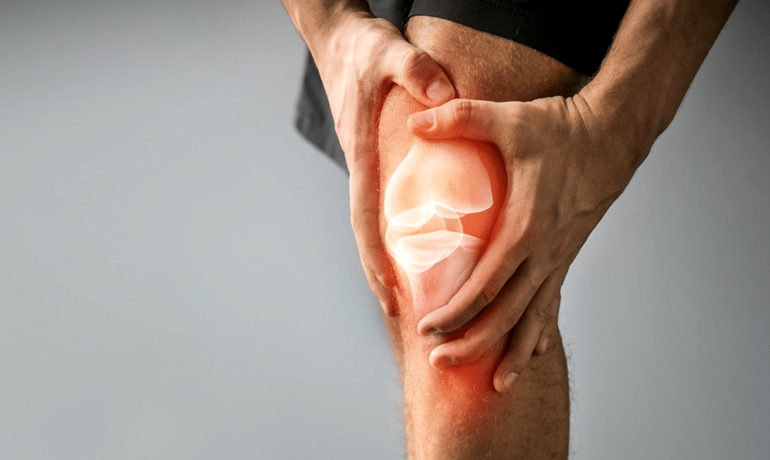
Osteoarthritis is the gradual breakdown of the cartilage that cushions your joints, and it is the most common cause of chronic knee pain seen at the clinic. Dr. Juilee Mhatre Nair explains what drives osteoarthritis, why non-surgical management is the starting point even in more advanced cases, and when surgery genuinely becomes the right option.
What osteoarthritis is
Osteoarthritis (OA) is a degenerative joint condition in which the smooth cartilage lining the ends of bones gradually wears down, allowing bones to rub against each other. This causes pain, swelling, stiffness, and — over time — reduced mobility. OA can affect any joint but is most often seen in the knees, hips, hands, and spine. Knee osteoarthritis specifically is one of the most common reasons patients are eventually referred for a discussion about /total-knee-replacement/ or /partial-knee-replacement/, though most people manage it for years with non-surgical care first.
Who this suits
This page is relevant whether you have early, mild joint stiffness that comes and goes, or more advanced arthritis with pain that limits daily activity. It is also relevant for patients researching advanced osteoarthritis treatment options because standard measures have not been enough, and those specifically looking for non-surgical options for severe knee osteoarthritis before considering surgery.
Causes and risk factors
- Aging — cartilage naturally wears down over time, increasing risk with age.
- Previous joint injury — fractures, ligament tears or dislocations can alter joint mechanics and accelerate wear.
- Repetitive stress — occupations or activities involving repetitive motion or heavy loading.
- Genetics — a family history of osteoarthritis can increase susceptibility.
- Excess body weight — adds significant load to weight-bearing joints like the knees and hips.
- Other conditions — including diabetes and inflammatory joint diseases.
Symptoms
Pain that worsens with activity and improves with rest, morning stiffness or stiffness after sitting for a while, swelling, a grinding or clicking sensation during movement (crepitus), and gradually decreasing range of motion are all typical of osteoarthritis. Symptoms usually develop gradually rather than appearing suddenly, though a flare can feel abrupt after a period of unusually high activity.
Non-surgical management first
Non-surgical treatment is genuinely the starting point for osteoarthritis at almost any stage, including more advanced cases. This includes pain relievers and anti-inflammatory medication, physiotherapy focused on strengthening the muscles that support the joint and improving range of motion, weight management to reduce joint load, activity modification such as switching to lower-impact exercise, and supportive measures like appropriate footwear or a cane where needed. Corticosteroid or lubricating injections are sometimes used for flare-ups. The clinic's /physiotherapy-services/ are built specifically around this kind of structured, ongoing management.
The surgical option and what it involves
Surgery is considered when conservative measures no longer provide adequate relief and imaging confirms significant cartilage loss. Options depend on how much of the joint is affected: arthroscopy has limited benefit specifically for osteoarthritis and is used selectively, an osteotomy can help when joint alignment is contributing to uneven wear, and joint replacement — partial or total, depending on whether damage is confined to one compartment — is the option most commonly discussed for advanced knee osteoarthritis. Dr. Juilee Mhatre Nair will walk you through which of these genuinely applies to your imaging and symptoms, rather than assuming replacement is the only path.
What robotic assistance changes, where relevant
If joint replacement becomes the appropriate treatment for your osteoarthritis, /robotic-knee-replacement-surgery/ may be used to support pre-operative planning and implant alignment precision. This applies only once replacement is genuinely indicated — it does not change how osteoarthritis itself is diagnosed or managed in its earlier stages, and it is not a substitute for exhausting non-surgical options first.
Osteoarthritis beyond the knee
While knee osteoarthritis is the most common presentation seen at the clinic, the same underlying process can affect the hip, hands, and spine. Hip osteoarthritis, for example, follows a similar pattern of cartilage breakdown and is covered in more detail on the /hip-care-and-injury-recovery/ and /hip-replacement-surgeries/ pages when it progresses to the point where replacement is discussed. Recognising which joint is affected, and how far the wear has progressed, is central to deciding the right combination of treatments for you.
Recovery phases
For patients managing osteoarthritis conservatively, "recovery" is really an ongoing process of adjusting activity, physiotherapy, and pain management as the condition evolves, rather than a fixed endpoint. If joint replacement surgery is eventually needed, recovery follows the phased pattern described on the total and partial knee replacement pages — early mobilisation, structured physiotherapy, and gradual return to activity.
Risks, discussed honestly
Osteoarthritis itself is a progressive condition — without any management, it can worsen over time and eventually limit mobility and quality of life significantly. Non-surgical treatments carry minimal risk but do not reverse existing cartilage damage. Surgical options, where needed, carry the general risks associated with any joint procedure, including infection, stiffness, and implant-related complications over the long term, which your surgeon will discuss specifically for your case.
What influences the cost
For patients managed conservatively, costs relate mainly to physiotherapy, medication, and periodic reviews. If surgery becomes necessary, cost is influenced by the type of procedure, the implant used, the hospital setting and length of stay, and the rehabilitation plan afterward, along with insurance or cashless coverage. We do not publish a fixed figure for either path — call or WhatsApp the clinic for a personalised estimate relevant to your stage of treatment.
What a consultation involves
A consultation includes a review of your symptoms and how they affect daily life, a physical examination of joint movement and alignment, and imaging review to assess the extent of cartilage loss. Dr. Juilee Mhatre Nair consults at /spine-and-knee-clinic-kharghar/ and at /spine-and-knee-specialist-kopar-khairane/. Learn more about her focus areas on the /dr-juilee-mhatre-nair/ page.
Frequently asked questions
Even in more severe osteoarthritis, non-surgical options are usually worth pursuing before considering surgery: structured physiotherapy to strengthen supporting muscles, weight management to reduce load on the joint, anti-inflammatory or pain medication, activity modification, and sometimes corticosteroid or lubricating injections. These do not reverse existing joint damage, but they can meaningfully reduce pain and improve function for many patients, and your response to them helps guide whether surgery becomes necessary.
Beyond standard pain management, a clinic focused on advanced osteoarthritis care can offer detailed imaging-based assessment of joint damage, a full range of surgical options from arthroscopy to partial and total knee replacement, and — where appropriate — robotic-assisted knee replacement for precise implant planning. The key benefit is having every option genuinely available so the treatment recommended is based on your joint, not on what a facility happens to offer.
No. Osteoarthritis is a "wear and tear" condition caused by the gradual breakdown of cartilage, most often related to age, injury, or joint stress. Rheumatoid arthritis is an autoimmune condition in which the body's immune system attacks the joint lining, causing inflammation. The two are managed differently, so an accurate diagnosis matters before starting treatment.
X-rays are typically the first imaging test, as they can show joint space narrowing and bone spurs consistent with osteoarthritis. MRI may be used when a more detailed view of the cartilage and surrounding soft tissue is needed, or when the diagnosis is unclear. Your surgeon will decide what imaging is genuinely necessary for your specific symptoms.
Surgery is generally considered when conservative treatment no longer provides adequate pain relief or function, and imaging confirms significant joint damage. There is no single trigger point that applies to everyone — some patients manage advanced changes on imaging with minimal symptoms, while others with moderate changes have significant pain. The decision is based on your actual symptoms and how they affect your life, not on imaging alone.
You cannot eliminate the risk entirely, particularly where genetics or prior injury are involved, but maintaining a healthy weight, staying active with low-impact exercise, and treating joint injuries properly when they happen can all reduce the load and stress that contribute to cartilage breakdown over time.
Talk to a spine and joint specialist
Share your symptoms, reports or scans and our team will help you book a consultation with Dr. Vishnu Vikraman Nair or Dr. Juilee Mhatre Nair at the Navi Mumbai location most convenient for you.