
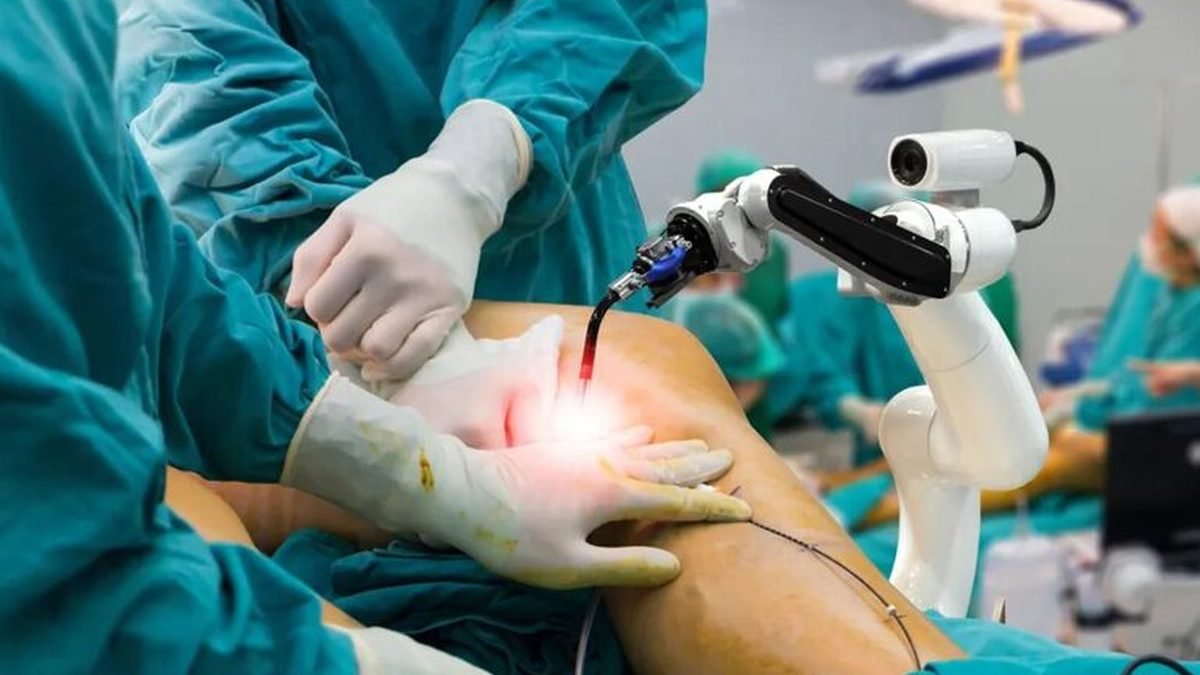
Robotic assistance in knee replacement does not replace the surgeon — it gives them a more precise 3D plan and a guided tool to help execute that plan, and the goal is more accurate implant positioning rather than a guaranteed number attached to "success."
Key points
- Robotic assistance changes the planning and cutting-guidance step — it does not change the surgeon's role or the implant used.
- The technology is designed to improve the accuracy of alignment and implant positioning; it does not come with a published success-rate percentage, because outcomes are individual.
- Both traditional and robotic-assisted total or partial knee replacement follow the same broad recovery phases.
- Candidacy depends on joint damage and overall health, not a specific "ideal" age.
- Recovery pain is expected and actively managed — it should trend downward, not stay flat or worsen.
What robotic assistance actually changes
A knee replacement, robotic-assisted or traditional, follows the same core steps: assessing the damaged joint surfaces, removing the affected bone and cartilage with precision, and fitting an implant that restores alignment and movement. What robotic assistance changes is the middle step. Before surgery, imaging is used to build a 3D model of your specific knee, and the surgical team plans the implant size, position, and alignment on that model. During surgery, a robotic arm or a robotic-guided cutting tool helps execute that plan within a very fine, pre-defined boundary — the system is designed to guide precise bone preparation according to the plan, while Dr. Juilee Mhatre Nair remains in control of every step of the procedure.
In plain terms: robotic assistance is a planning and precision tool. It is not an autonomous robot performing surgery on its own, and it does not change the fundamental goals of the operation — a well-aligned, well-fitted implant and a joint that moves the way it should.
Difference between traditional and robotic knee surgery
The two approaches share the same surgical philosophy and the same range of implants. The practical differences are:
- Pre-operative planning: robotic-assisted surgery typically uses detailed imaging to build a patient-specific 3D plan before the operation begins; traditional surgery relies more on standard instrumentation and intraoperative assessment.
- Execution: robotic-assisted surgery uses a guided arm or tool to help translate that plan onto the bone with fine precision; traditional surgery uses manual cutting jigs and guides.
- Surgeon judgement: in both approaches, the surgeon assesses ligament balance, joint tension, and movement throughout the procedure — the robotic system supports this judgement, it doesn't substitute for it.
Neither approach is "better" in the abstract — the right one for you depends on your knee anatomy, the extent of damage, and what your surgeon recommends after examining you.
What the evidence actually supports — and what we won't claim
You may have seen claims online about a specific "success rate" for robotic knee replacement. We deliberately don't publish a percentage or a study citation on this page, because outcome data varies across patient groups, follow-up periods, and how "success" is even defined in a given study — quoting a single number risks being misleading rather than informative. What can be said in general, mechanical terms is that robotic assistance is designed to improve the accuracy of implant alignment and positioning compared with relying on manual technique alone. Precision of alignment is one factor among several — including your own bone quality, ligament health, weight, activity level, and rehabilitation — that influence how a knee replacement performs for you specifically. Dr. Juilee Mhatre Nair will discuss expected outcomes for your individual case in consultation, rather than quoting a generic figure that may not apply to you.
Is robotic-assisted surgery available for both total and partial knee replacement?
Robotic assistance can support both total knee replacement, where the entire joint surface is resurfaced, and partial knee replacement, where only the damaged compartment of the knee is replaced and healthy bone is preserved. Which one is appropriate depends on how much of the joint is affected — this is assessed through examination and imaging, not chosen based on the technology alone. You can read more about the procedure itself on the robotic knee replacement surgery page.
What age is best for robotic knee replacement?
There is no specific age that makes someone an ideal or ineligible candidate. What matters more is the degree of joint damage visible on imaging, how much your daily life is affected by pain and stiffness, your general health and fitness for surgery, and how much relief non-surgical measures such as physiotherapy, weight management, and medication have already provided. Both relatively younger, active patients and older patients are evaluated on these same factors — your surgeon will advise whether surgery is appropriate now or whether continuing non-surgical management makes more sense for the time being.
How long is recovery after robotic knee replacement?
Recovery is best understood in phases rather than a fixed day count:
- Early phase (hospital and first days home): pain and swelling management, and starting to walk with support under physiotherapy guidance.
- Middle phase: progressive physiotherapy to rebuild knee movement and strength, gradually reducing reliance on walking aids.
- Later phase: return to most daily activities, with higher-impact or more demanding activities added back only once your surgeon confirms the joint is ready.
The pace through these phases depends on your starting fitness, how consistently you follow physiotherapy, and your general health — your care team will give you a personalised expectation rather than a generic countdown.
How painful is knee replacement recovery?
Some pain and swelling in the early recovery period is normal and expected — it is not a sign that anything has gone wrong. It is managed proactively with prescribed pain relief, ice, elevation, and a paced activity plan, and it should generally trend downward as the weeks progress, even if some day-to-day fluctuation is normal, especially after physiotherapy sessions. If pain feels severe, is getting worse rather than better, or doesn't respond to the plan you've been given, tell your surgical team so it can be reviewed rather than pushing through it alone.
When to seek urgent care after knee replacement
Most recovery follows the general pattern described above without complication. It's worth contacting your care team promptly, rather than waiting for a scheduled follow-up, if you notice:
- A sudden increase in swelling, redness, or warmth around the knee, especially with fever.
- Wound discharge, a foul smell, or the wound reopening.
- Calf pain, swelling, or tenderness in one leg (which can occasionally indicate a blood clot).
- Chest pain or breathlessness.
- A sudden loss of the ability to bear weight after previously managing to walk.
These situations are uncommon, and mentioning them is about safety, not likelihood — most patients recover through the expected phases without any of these issues.
Frequently asked questions
Robotic assistance is designed to help the surgeon plan implant position and alignment with greater precision before making any cuts, and then execute that plan very closely during surgery. Whether this translates into a better outcome for you specifically depends on your knee, your general health, and your rehabilitation — Dr. Juilee Mhatre Nair will discuss expected outcomes for your case during consultation.
Both approaches use the same surgical principles and implant types. The difference is in the planning and cutting-guidance step: traditional surgery relies on manual instruments and the surgeon's intraoperative judgement, while robotic-assisted surgery adds a 3D surgical plan and a robotic arm or guided cutting tool that helps execute that plan with fine precision. The surgeon remains in control throughout — the robot assists, it does not operate independently.
We don't publish a success-rate percentage, because individual outcomes depend on factors specific to each patient — the condition of the joint, overall health, and how closely rehabilitation is followed. What can be said in general terms is that robotic assistance is designed to improve the accuracy of implant alignment and positioning. Your surgeon will discuss what to realistically expect for your specific knee during your consultation.
Recovery follows general phases — an initial hospital and early mobility phase, a middle phase of physiotherapy-guided strengthening and walking without support, and a longer phase of building back to fuller activity — but the pace within each phase varies by patient. There is no single guaranteed timeline; your surgical team will set expectations based on your progress.
Some discomfort in the days and weeks after surgery is expected and is actively managed with pain relief medication, ice, elevation, and a structured physiotherapy plan. Pain generally trends downward as swelling settles and strength improves, though the pace differs between patients. Tell your care team if pain feels disproportionate to your stage of recovery, so it can be reviewed.
There isn't a specific "best age" — candidacy depends more on the degree of joint damage, day-to-day impact on your life, general health, and how much benefit non-surgical options have given so far, rather than age alone. Both younger and older patients are assessed individually; your surgeon will advise whether robotic-assisted total or partial knee replacement is appropriate for your situation.
Related guides

Sciatica and Slip Disc: Sleeping Positions, Pain Relief, and Recovery Timeline
Practical, patient-first guidance on sleeping positions for sciatica and a slipped disc, a graded approach to severe leg pain, and realistic recovery phases after endoscopic discectomy or microdiscectomy.
Read moreWondering if robotic knee replacement is right for you?
Every knee is different. Share your symptoms, reports or scans and our team will help you book a consultation with Dr. Juilee Mhatre Nair at the Navi Mumbai location most convenient for you, including the flagship clinic in Kharghar.
Consultations for knee and joint replacement are available at NAIR Spine & Knee Clinic, Kharghar and other Navi Mumbai locations — call or WhatsApp the clinic to confirm the current consulting schedule.