
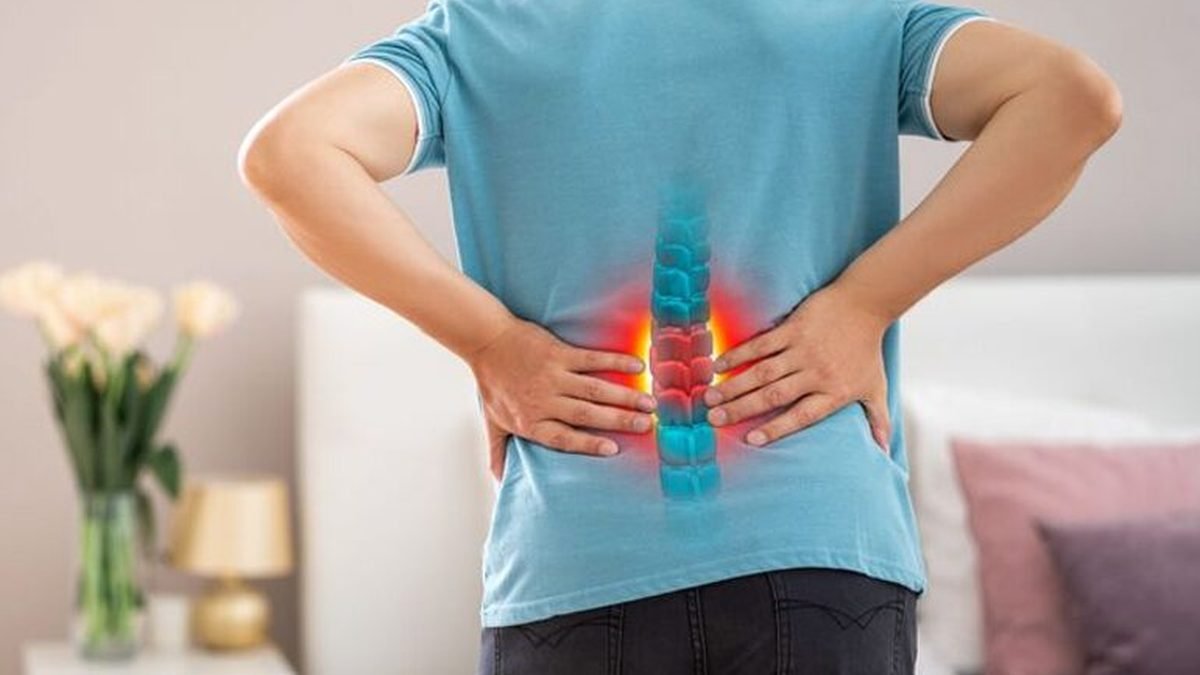
If sciatica or a slipped disc is keeping you up at night, the most useful immediate change is usually how you sleep — a supported, neutral spine position reduces the pressure that triggers night-time pain — while the underlying cause is assessed and treated with a graded plan that rarely needs to start with surgery.
Key points
- Side-lying with a pillow between the knees, or back-lying with a pillow under the knees, are the two positions most patients find comfortable with sciatica or a slip disc.
- Avoid sleeping fully on your stomach and avoid soft, sagging mattresses that let the spine curve awkwardly overnight.
- Severe leg pain is treated in a graded way — rest and physiotherapy first, with injections or minimally invasive surgery reserved for patients who don't improve.
- Recovery after endoscopic discectomy or microdiscectomy happens in general phases, not a fixed number of days — your surgeon will personalise the expectation.
- Numbness in the groin, or new difficulty controlling the bladder or bowel, needs urgent medical attention.
Why sleeping position matters with sciatica and a slip disc
Sciatica is the pain that travels along the sciatic nerve — from the lower back through the buttock and down the leg — and it is most often triggered by a slipped (herniated) disc pressing on a nerve root nearby. When you lie down, the position of your spine changes how much pressure sits on that irritated nerve. A neutral, supported spine keeps the disc and nerve in a more relaxed relationship, which is why many patients notice that changing how they sleep makes a real difference to how the night — and the next morning — feels.
Best sleeping positions for sciatica relief
Side-lying with a pillow between the knees
This is one of the most commonly comfortable positions. Lying on the side that feels easier (this can be either side, and sometimes changes night to night), with the knees gently bent and a pillow placed between them, keeps the hips, pelvis, and lower spine aligned instead of twisting. A slightly thicker pillow under the head keeps the neck in line with the rest of the spine.
Back-lying with a pillow under the knees
For patients who prefer sleeping on their back, placing a pillow or a rolled towel under the knees reduces the arch in the lower back and can ease pressure on the nerve. A small rolled towel under the small of the back adds extra support for some people.
Positions to avoid
Sleeping flat on the stomach tends to arch the lower back and can worsen nerve-related pain, so it's best avoided during a flare. Very soft or old, sagging mattresses that let the hips sink lower than the shoulders also encourage an unhelpful spinal curve overnight.
How to sleep safely with a slipped disc
- Get in and out of bed by rolling first. Roll onto your side, bring both knees up, and use your arms to push yourself up sideways rather than sitting straight up from lying flat — this avoids the combined bending-and-twisting movement that often aggravates a disc.
- Support, don't overcorrect. Extra pillows should support a neutral spine, not force it into an unnatural curve.
- Keep the room and bedding practical. A firmer mattress (or a supportive topper on a soft one) generally helps more than a very plush one.
- Stay gently active during the day. Complete bed rest for more than a day or two is generally not advised — short, regular walks tend to help more than prolonged lying down.
- Time your pain relief. If your doctor has prescribed medication, taking it as advised in the evening can make it easier to settle into a comfortable position.
These are general measures; they work alongside — not instead of — the treatment plan your spine specialist recommends after assessing your specific disc and nerve findings.
Best treatment approach for severe sciatica pain in the leg
Severe sciatica — whether the pain radiates down the right leg or the left — is generally approached in graded steps rather than jumping straight to surgery:
- Initial phase: activity modification, anti-inflammatory or nerve-pain medication, and guided physiotherapy to reduce irritation and begin gentle mobility work.
- If pain persists: a targeted corticosteroid injection around the affected nerve root may be considered to calm inflammation while other treatments continue.
- If pain doesn't respond, or there is significant or worsening weakness: your surgeon may discuss endoscopic discectomy or another minimally invasive option to relieve pressure on the nerve directly.
Which step is right for you — and how quickly to move through them — depends on the severity of pain, how long it has lasted, and what your examination and any imaging show. This is also closely related to general back pain and leg pain that hasn't been diagnosed as nerve-related, so if you're unsure which category your symptoms fall into, a clinical assessment is the fastest way to find out.
Best exercises after an endoscopic discectomy
Exercise after an endoscopic discectomy is introduced gradually and is usually guided by a physiotherapist rather than followed from a generic list, because the right pace depends on what was found and treated during your specific procedure. That said, the general pattern most patients follow includes:
- Early phase: short, frequent walks and simple positional changes to avoid stiffness, without heavy lifting, twisting, or prolonged sitting.
- Middle phase: gentle core-activation and mobility exercises specifically chosen by your physiotherapist, progressing as comfort allows.
- Later phase: gradual return to general fitness activity and, eventually, the activities you did before symptoms started, once your surgeon confirms you're ready.
Pushing ahead of where your body is ready to be — rather than following a set weekly target — is the most common avoidable setback in this phase.
Recovery time after microdiscectomy or endoscopic discectomy: phases, not a countdown
Patients understandably want an exact number of days, but recovery genuinely varies with age, general fitness, how long the nerve was compressed before surgery, and how closely early activity guidance is followed. Instead of a fixed timeline, it helps to think in phases:
- Settling phase: the immediate post-operative period where surgical discomfort eases and you begin walking short distances.
- Rebuilding phase: gradual increase in daily activity and physiotherapy-guided strengthening, as leg pain and any residual numbness continue to improve.
- Return-to-activity phase: resuming normal routines, work, and eventually more demanding activity, at a pace your surgeon confirms is appropriate for you.
Many patients notice a meaningful drop in leg pain fairly early after surgery, while numbness or tingling — since nerves heal more slowly than the disc itself — can take longer to settle. Your surgeon will give you a personalised expectation once your procedure and progress are known, rather than a generic number.
When to seek urgent care
Most sciatica and slip disc symptoms are manageable and improve with the graded approach above. That said, it's worth seeking prompt medical attention — rather than waiting for a routine appointment — if you notice any of the following:
- New or rapidly worsening weakness in the leg or foot.
- Numbness around the groin, inner thighs, or genitals (sometimes called "saddle" numbness).
- New difficulty controlling the bladder or bowel.
- Severe pain that is not helped at all by rest, position changes, or medication.
These can indicate significant nerve compression that benefits from urgent assessment. This is mentioned calmly, not to alarm you — the large majority of patients with sciatica or a slip disc never experience these signs and recover well with a straightforward, graded plan.
Frequently asked questions
There is no single position that works for everyone, but many patients find that lying on their side with a pillow between the knees, or lying on their back with a pillow under the knees, reduces pressure on the lower spine and eases nerve irritation overnight. The right position is the one that keeps your spine in a neutral, supported line — your spine specialist can help you adapt this to your specific pattern of pain.
Focus on keeping the spine supported and avoiding twisted or fully flat-on-the-stomach positions, use a mattress that doesn't sag in the middle, and get in and out of bed by rolling onto your side first rather than sitting straight up. Small adjustments like these reduce unnecessary strain on the disc while it settles.
Severe sciatica is usually assessed and treated in a graded way — starting with rest from aggravating activity, medication, and physiotherapy, and moving to more targeted options such as an injection or, for select patients, endoscopic surgery if symptoms don't settle or if there is significant weakness. Which side is affected doesn't change the treatment logic — the underlying cause and severity do.
In the early weeks, gentle walking and the specific mobility exercises given by your physiotherapist are usually the focus, with core-strengthening and general conditioning added in gradually as comfort allows. Your surgical team will pace this to your individual recovery rather than a fixed calendar.
There is no single "exact" number that applies to every patient — recovery happens in general phases (initial settling, gradual return to daily activity, and progressive return to fuller activity) and the pace within each phase varies with age, fitness, and how long symptoms were present beforehand. Your surgeon will discuss a realistic expectation for your specific case.
If leg pain or back pain hasn't improved after a couple of weeks of reasonable self-care, keeps recurring, or is accompanied by numbness or weakness, it's reasonable to book a consultation rather than continue waiting it out.
Related guides
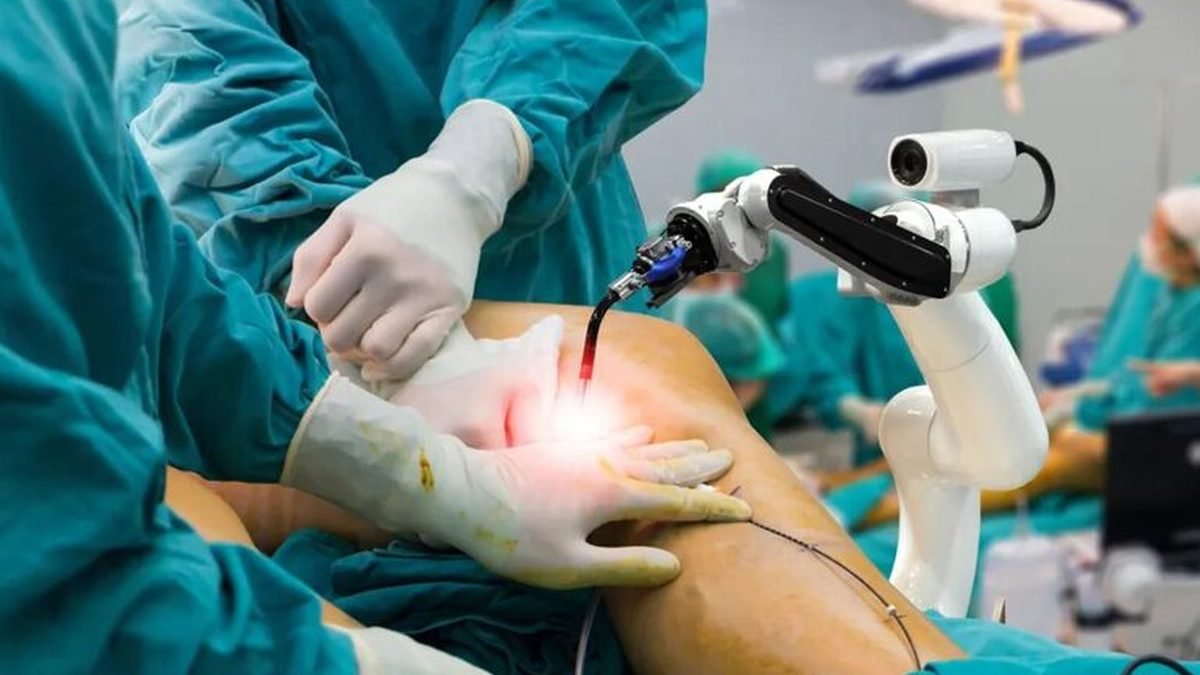
Robotic Knee Replacement: How It Works, Recovery, and What the Evidence Shows
A plain-English look at what robotic assistance changes in knee replacement surgery, how it differs from the traditional technique, and what recovery typically involves — without invented success-rate numbers.
Read moreStill dealing with sciatica or slip disc pain?
A short consultation can tell you which phase of treatment is right for you. Share your symptoms, reports or scans and our team will help you book a consultation with Dr. Vishnu Vikraman Nair at the Navi Mumbai location most convenient for you, including the flagship clinic in Kharghar.
Consultations for slip disc and sciatica care are available at NAIR Spine & Knee Clinic, Kharghar and other Navi Mumbai locations — call or WhatsApp the clinic to confirm the current consulting schedule.